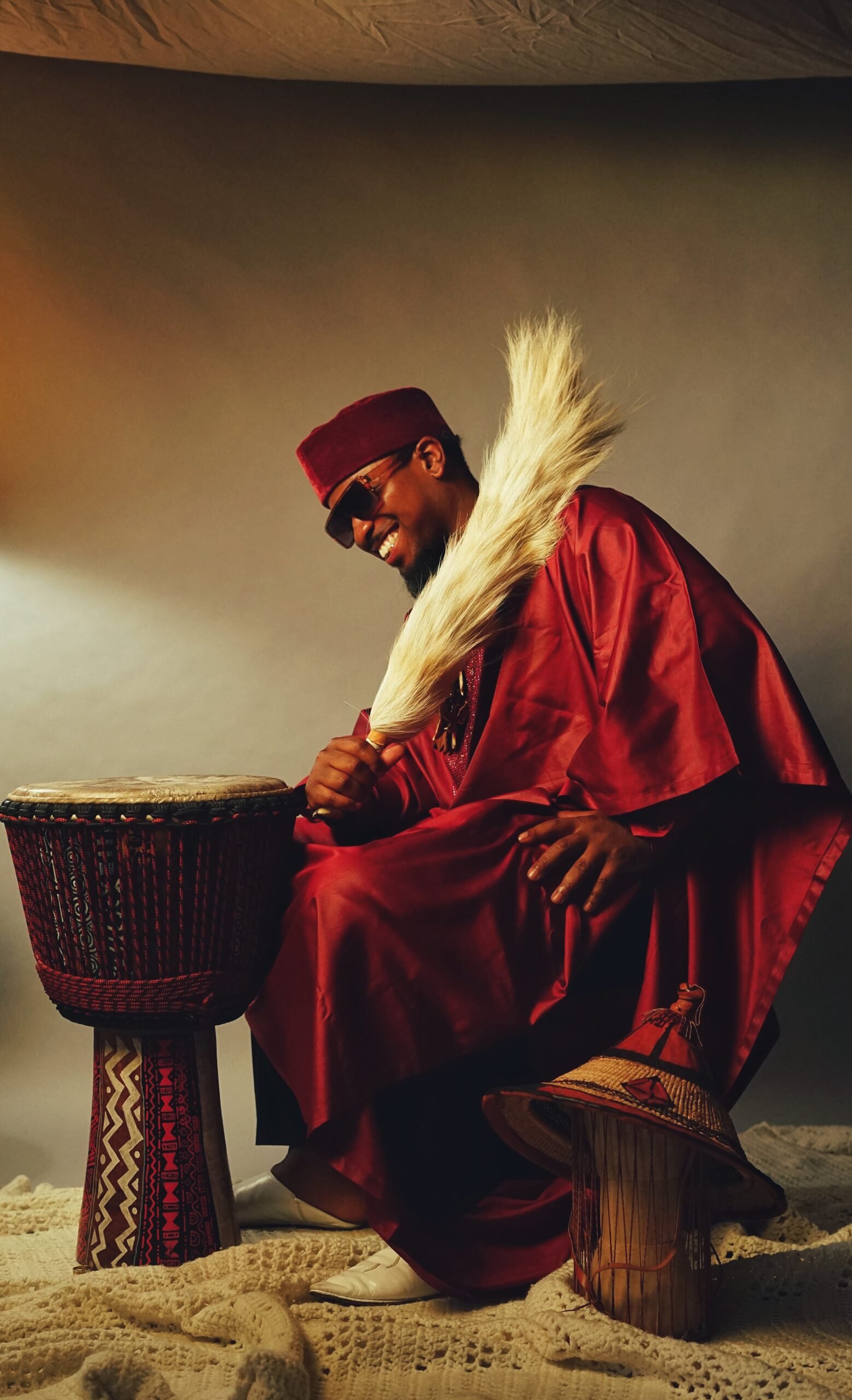
The SEED
Rhythm has been part of my life for as long as I can remember.
I began learning African drumming as a child in North Minneapolis under Brother Ghana Mbaye. What started with learning how to make a drum speak eventually became something much larger.
The drum taught me to listen.
It taught me discipline.
It taught me that rhythm could communicate something before a single word was spoken.
As I grew older, my relationship with African and African diasporic music continued to deepen. I have studied different rhythms and traditions, learned through community, and continue to learn from the example and teachings of artists and tradition-bearers such as master Guinean drummer Fodé Bangoura.
I don’t consider myself finished.
I consider myself part of a lineage of learning.
The deeper I go into the drum, the more I understand that rhythm isn’t simply something I perform.
Rhythm is a language.
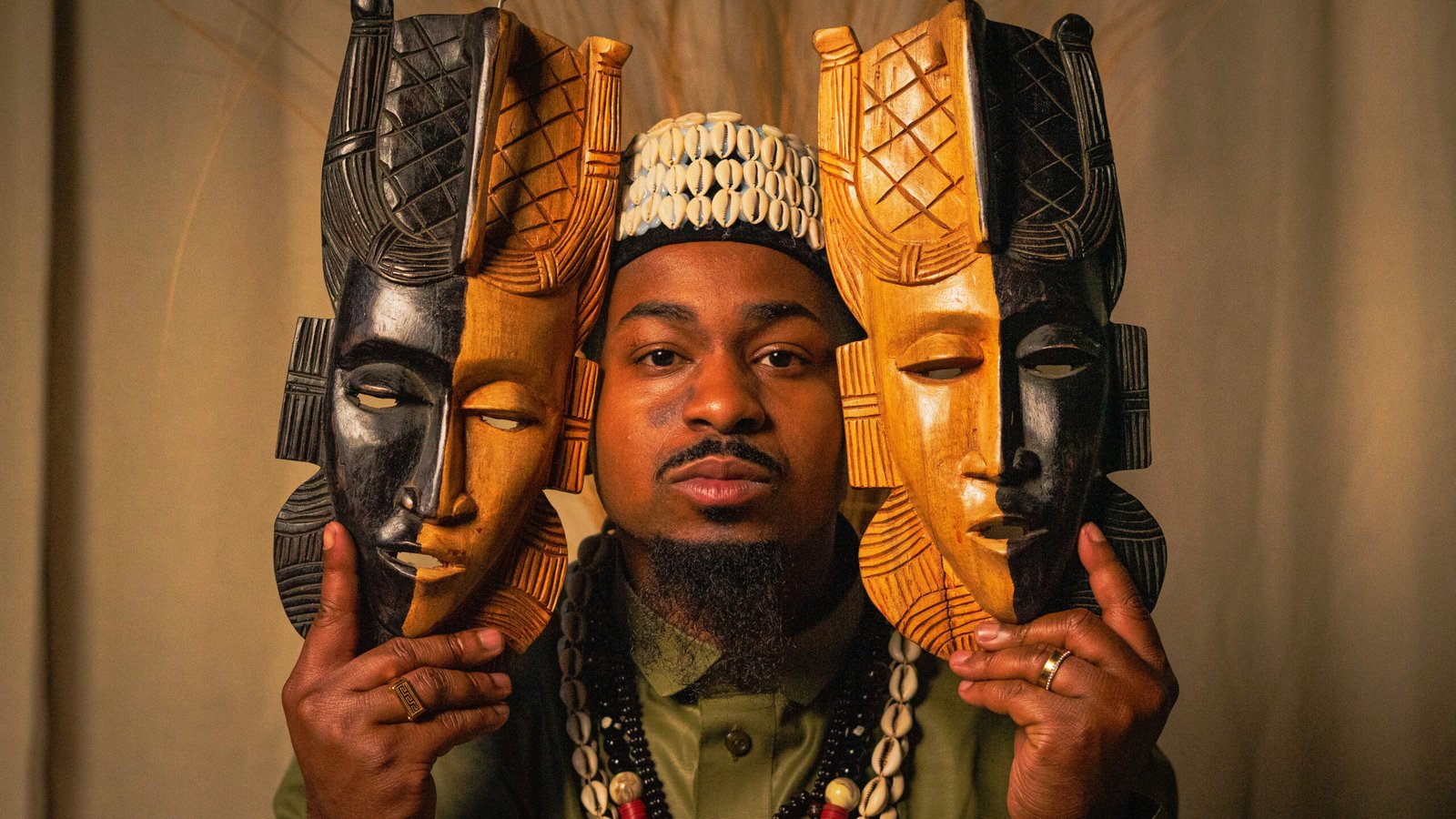
THE TREE
Somewhere along the way, I realized the drum wasn’t just teaching me rhythm.
It was teaching me who I was.
The little boy who learned to make a drum speak grew into a man searching for his own voice.
And I found pieces of that voice everywhere.
In Hip Hop.
In stories passed from one generation to the next.
In the sound of hands meeting skin.
In the wisdom of elders.
In the laughter of children gathered around a drum.
In North Minneapolis—the community that raised me, shaped me, and gave me stories worth carrying.
Over time, all of those pieces began growing together.
Today, I call myself a modern-day griot. Not because I believe I have mastered some ancient tradition, but because I understand the responsibility of carrying something forward.
I tell stories.
I make music.
I drum.
I teach.
I listen.
And through all of it, I try to create moments where people can remember something about themselves—where we can laugh together, move together, question together, heal together, and sometimes just sit in the rhythm together.
I’m still growing.
Still learning what my branches can hold.
Still discovering where my roots reach.
But I know now that the seed planted in me all those years ago was never meant to remain a seed.
It was meant to grow.
And whatever fruit this tree produces—
I want somebody else to be able to eat from it.
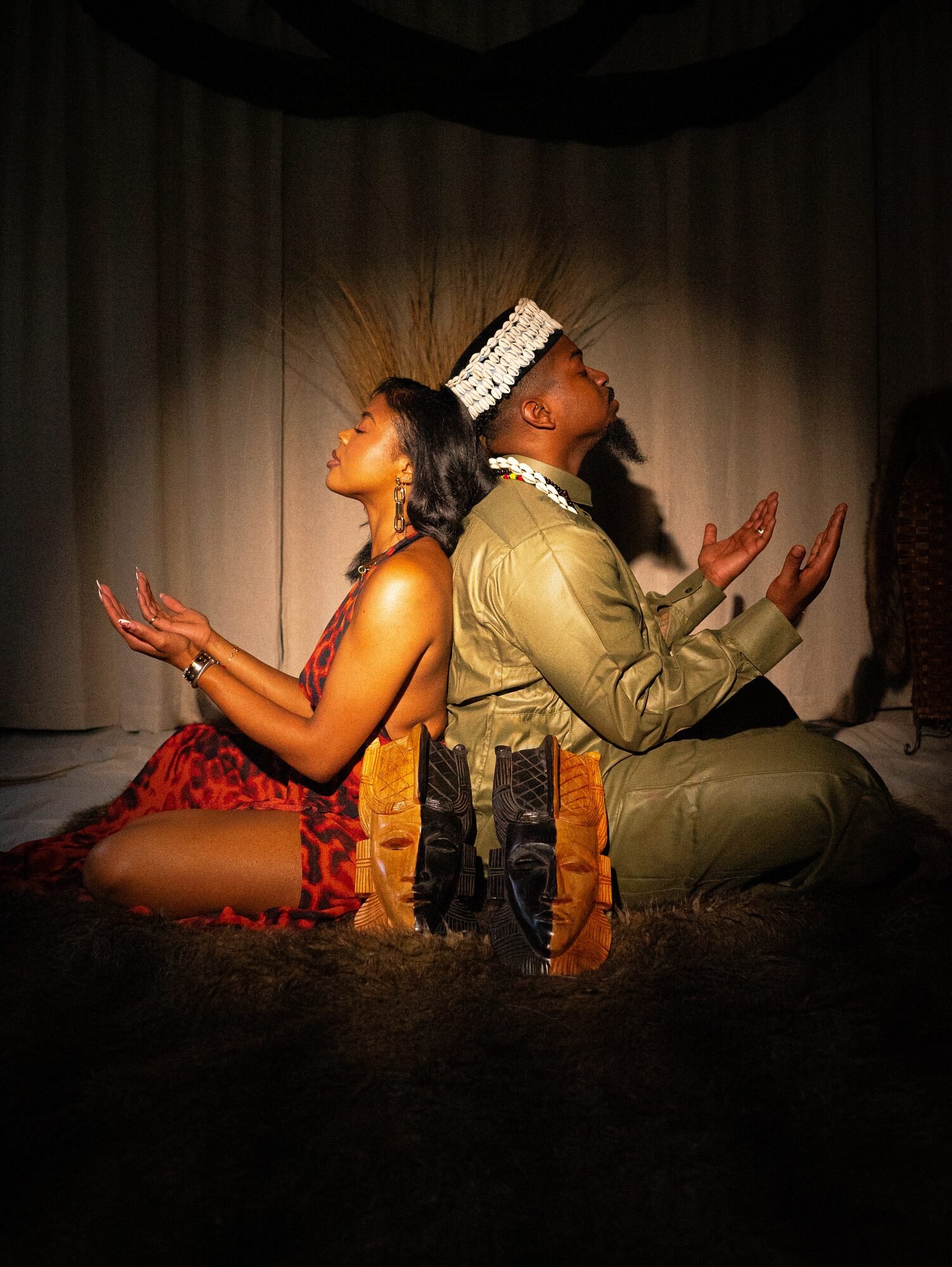
THE FRUIT
I’ve learned that a tree doesn’t grow for itself.
Eventually, it has to give something back.
For me, the fruit is found in the moments when the rhythm leaves my hands and becomes something we share.
It’s in the young person touching a djembe for the first time and realizing they can make it speak.
It’s in a room full of strangers finding the same heartbeat.
It’s in a story that makes somebody laugh, remember, question, or see themselves differently.
It’s in the music.
The workshops.
The performances.
The conversations that continue long after the last drumbeat fades.
This is why I create.
Not simply to be seen or heard, but to give something.
Something that reminds us where we come from.
Something that makes us curious about the stories we carry.
Something that reconnects us to one another.
I believe the best art leaves something behind.
A rhythm somebody keeps humming.
A story somebody decides to tell.
A question somebody wasn’t asking before.
A young person who begins searching for their own roots.
Those are the moments that matter most to me.
Because somewhere along this journey, I realized that the people who poured into me were planting seeds they might never get to see fully grown.
Now I get to do the same.
The fruit was never meant for the tree.
It was always meant to feed somebody else.
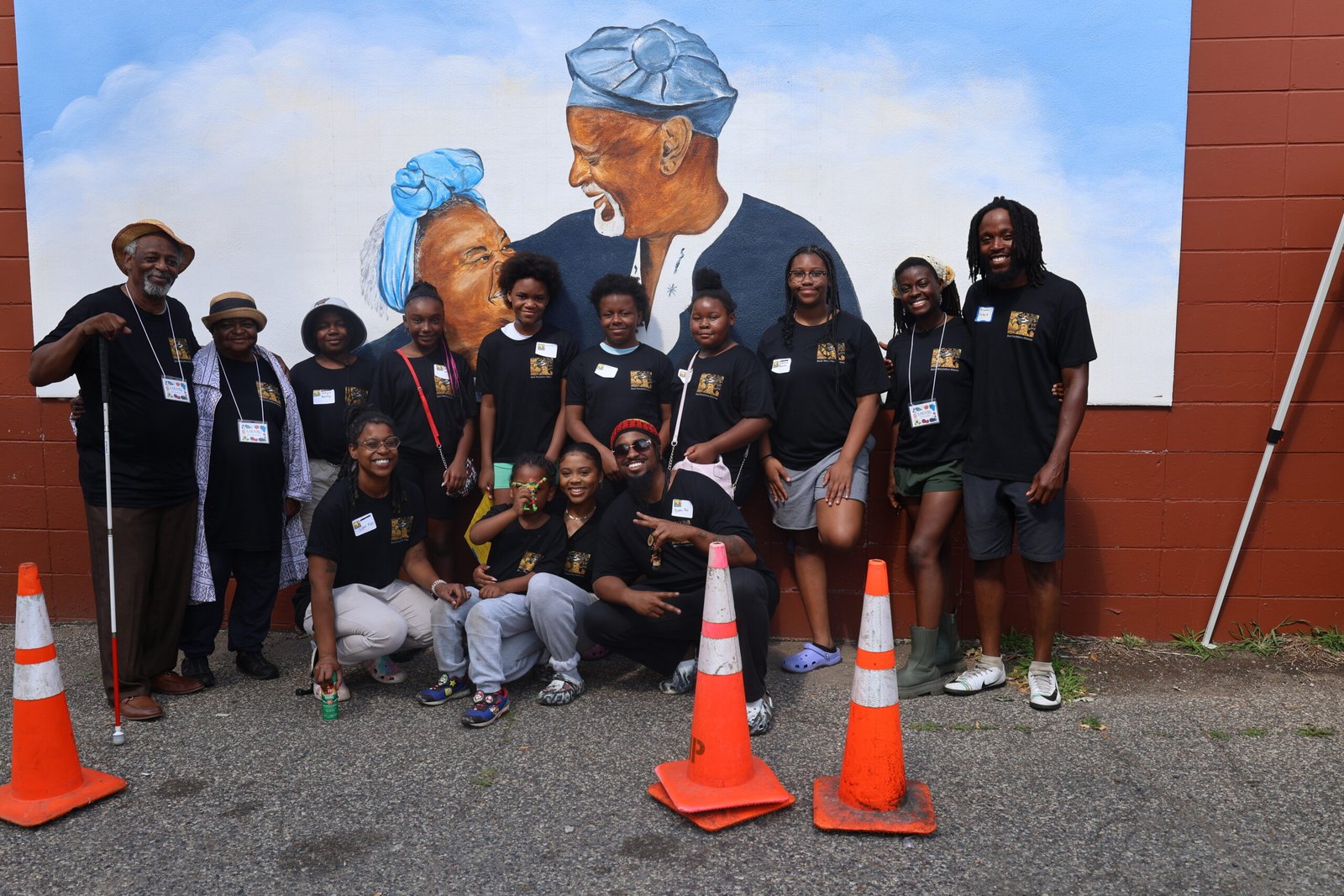
THE SEEDS
Every fruit carries seeds.
And maybe that’s the part of this journey that means the most to me.
I think about the people who poured into me before I fully understood what they were giving me. Teachers. Elders. Artists. Family. Community.
They planted something.
Sometimes through a lesson.
Sometimes through a rhythm.
Sometimes through a story.
Sometimes simply by allowing me to watch how they moved through the world.
Now I understand that I am carrying seeds too.
Every time I place a drum in a young person’s hands, share a story, teach a rhythm, make a song, or create space for people to remember who they are, I am planting something.
I may never know what grows from it.
And I’m learning to be okay with that.
Because the people who planted seeds in me couldn’t have known exactly who I would become either.
That’s the beauty of planting.
You give what you have.
You nurture what you can.
And then you trust the next generation to grow in ways you could never imagine.
One day, I hope somebody carries a rhythm I taught them into a room I will never enter.
I hope they tell a story I helped them remember.
I hope they create something I never would’ve thought to create.
And I hope they plant seeds of their own.
Because this was never supposed to end with me.
The seed became a tree.
The tree produced fruit.
The fruit carried seeds.
And the story continues.
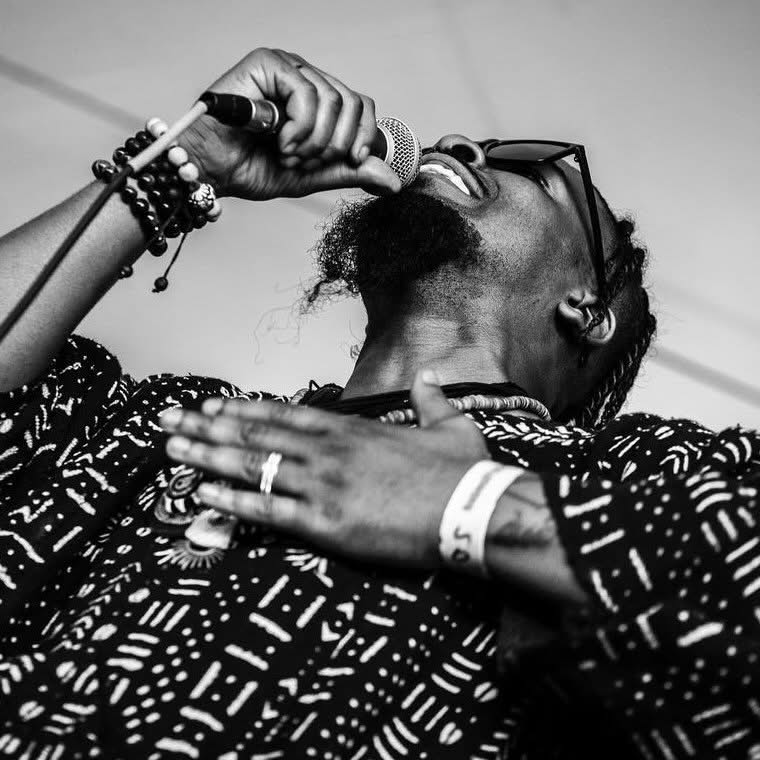
THE STORY
Before the drum, before Hip Hop, and before I understood myself as a storyteller, there was art.
Drawing was probably the first way my creativity became visible to other people.
I remember being in first and second grade and being that kid in the classroom—the one everybody would gather around to watch draw.
There was something about taking a blank piece of paper and turning it into something that fascinated me. I could sit there with a pencil and disappear into whatever I was creating. And apparently, other kids saw something in it too.
They started asking me to draw things for them.
Then something funny happened.
They started offering me money.
A dollar here. Five dollars there. Sometimes even more depending on what they wanted me to make—which, as an elementary school kid back then, felt like some serious money.
Without realizing it, I had become a little working artist.
I wasn’t thinking about entrepreneurship or building a creative career. I didn’t have language like commissioned artwork.
I just knew somebody had an idea in their head, they believed I could bring it to life, and they were willing to give me a few dollars to do it.
Looking back, I think there’s something important about that.
My first creative language wasn’t sound. It was visual.
Before I learned to make a drum speak, I was learning how to make a blank page speak.
Before I started filling notebooks with verses, I was filling pages with pictures.
And before I ever thought about becoming Brotha Asé, I was already experiencing one of the feelings that would follow me throughout my life:
The feeling of making something that didn’t exist before—and watching other people connect with it.
Eventually, the pencil would be joined by the drum.
The drum would be joined by the pen.
The pen would be joined by my voice.
And over time, I began to understand that the medium could change, but the instinct underneath it was always the same.
I wanted to create.
I was raised in North Minneapolis, in a family and community where rhythm, storytelling, Black culture, faith, and community were never separate things. Long before I had the words modern-day griot or cultural architect to describe myself, the foundation for Brotha Asé was already being built.
My early education at W.I.S.E. Charter School played a major role in that foundation. W.I.S.E. was an environment where African and African American history and culture were part of how we understood ourselves. The principles of Kwanzaa and other Afrocentric values were reinforced both at school and at home, teaching me early about purpose, creativity, collective responsibility, cultural identity, and the importance of community.
It was through W.I.S.E. that I became connected with Brother Ghana Mbaye and Brother Fatawu Sayibu through the Drum Core Ensemble. African drumming became one of my earliest creative languages.
As part of the ensemble, I had opportunities to perform throughout the Twin Cities at places like the Capri Theater, Penumbra Theatre, the Guthrie Theater, and many other stages and community spaces.
By the time I was around eleven years old, Brother Ghana began bringing me along on gigs with him.
Looking back, some of the greatest lessons he gave me were lessons he probably didn’t even realize he was teaching.
I watched him.
I watched how he communicated with dancers and musicians. I watched how he carried himself onstage. I watched how he listened. I watched how he served a room through rhythm. I watched what it meant to be an artist whose relationship with the community extended far beyond a performance.
I was constantly collecting what I like to call nuggets of gold.
A musical phrase here.
A lesson about professionalism there.
A way of listening.
A way of responding.
A way of carrying the drum.
Those little things became part of my own artistic vocabulary, and many of them remain in my practice today.
At the same time, storytelling was all around me.
My grandparents, Nothando and Vusumuzi Zulu, founded the Black Storytellers Alliance, so I grew up in what I now recognize as a modern-day griot family.
Every year, the Black Storytellers Alliance brought storytellers from across the country and around the world into our community for the Black storytelling festival. As a child, I had the opportunity to watch, listen to, learn from, and sometimes participate alongside storytellers like Gran’daddy Junebug (Mitch Capel), Tejumola Ologboni, Baba Jamal Koram, Brother Oba William King, Atiba Kwabena, Toni Simmons, Mama Koku, Valerie Tutson, Dylan Pritchett, Gcina Mhlophe of South Africa, Danielle Daniel, and so many others.
I didn’t understand how special that was at the time.
These weren’t people I studied in a book.
They were people I could watch.
I could hear how they changed their voices to become different characters. I could see how they used silence. I could watch a room full of people lean forward because of nothing more than a well-told story.
I learned that you didn’t need much to take people somewhere.
Sometimes all you needed was a story.
Looking back, I can see that long before I ever called myself a storyteller, I was being raised around storytellers.
Then, around sixth grade, I discovered another way to tell stories.
Hip Hop.
My friends and I would spend hours writing verses in notebooks. We had notebooks filled with songs—not because we had studios waiting for us or because we thought anybody was going to hear them.
Most of those songs were never recorded.
We wrote because we loved the art of writing.
We wanted better rhymes. Better metaphors. Better ways of saying things.
The internet wasn’t what it is today, so sometimes we would literally pull out a dictionary and start looking for words. We’d learn what they meant and figure out how we could work them into verses.
Around 2010, Lil Wayne was a major influence on the way my friends and I thought about writing. His metaphor game was incredible. The way he could paint an image with words, manipulate cadence, or say something that made you stop and think about what you had just heard fascinated me.
We wanted to learn how to do that ourselves.
But those notebooks weren’t only about punchlines.
My friends and I were also young Christians trying to figure out what faith actually meant to us. We were getting old enough to ask our own questions about God, life, manhood, purpose, and the kind of people we wanted to become.
Some of those conversations happened through songs.
Others happened during late-night sleepovers with the guys, talking about everything young men talk about when they’re trying to understand themselves and the world around them.
Those conversations became part of my development as a writer too.
Then came Wayzata High School.
Going from North Minneapolis to Wayzata was a culture shock.
I came from a healthy family and had what I needed, but suddenly I was around a level of wealth I hadn’t experienced before. I was seeing sophomores in high school pulling up in Hummers, Bentleys, and Mercedes.
It felt like another world.
But Wayzata also opened another door for me musically.
Ninth grade was my first time in band.
Until then, my musical education had mostly been oral.
I knew African drumming through Brother Ghana.
I knew Hip Hop.
I knew how to write.
I knew rhythm.
And I had taken a handful of private snare-drum lessons because my dad made sure I had access to them.
But I didn’t know how to read music.
I remember looking at sheet music for the first time and having absolutely no idea what I was supposed to do with it.
So I adapted.
I would literally write the name of every note above the note on the sheet music.
Then I would slowly figure out the piece and memorize it.
What carried me through was my sense of rhythm.
I couldn’t always explain what was happening on the page yet, but I could feel it.
Eventually, band began opening my ears in a completely different way.
I learned how beautiful music could become when different instruments were working together. I started hearing the relationship between percussion, brass, woodwinds, melody, harmony, and rhythm.
I began understanding the power of an ensemble.
Band taught me to feel music differently.
By eleventh grade, another musical door opened when I discovered Robert Glasper.
Hearing what Glasper and his musicians were doing blew my mind. Jazz, Hip Hop, R&B, improvisation—it could all exist together.
Around that same period, my ears were also opening toward contemporary African music and Afrobeats through artists like Iyanya, Davido, Maleek Berry, and many others.
Slowly, all these worlds started coming together.
African rhythm.
Black storytelling.
Hip Hop.
Jazz.
Afrobeats.
Faith.
History.
Community.
For a long time, I experienced them as different pieces of my life.
Today, I understand that they were all helping build the same person.
Brotha Asé.
When I look back now, I realize Brotha Asé didn’t begin when I chose the name.
He was being formed at W.I.S.E.
He was the little boy sitting behind a drum with Brother Ghana and Brother Fatawu.
He was the eleven-year-old being brought onto gigs, quietly watching everything happening around him.
He was the grandson sitting at storytelling festivals surrounded by griots and elders from around the world.
He was the sixth grader filling notebooks with rhymes.
He was the teenager opening dictionaries because he needed a better word for his next verse.
He was the young Christian having late-night conversations with his friends about God, life, purpose, and manhood.
He was the North Minneapolis kid walking into Wayzata and discovering another world.
He was the ninth grader writing note names on sheet music because he refused to let not knowing something keep him from learning it.
And he was the teenager hearing Robert Glasper and realizing that music didn’t have to live inside the boxes people created for it.
All of those experiences are part of how I understand myself today as a modern-day griot and cultural architect.
I don’t use those words because I believe I’ve mastered every tradition I’ve encountered.
I use them because I’ve come to understand the responsibility of what has been given to me.
I build with rhythm.
I build with words.
I build with stories.
I build with history.
I build with faith.
I build with the lessons of my elders and the experiences of my community.
And I am still collecting those nuggets of gold.
The difference is that now I understand that eventually, what you spend your life receiving becomes something you have a responsibility to give.
Everything that was poured into me helped create Brotha Asé.
Now my work is figuring out what I can build with it—and what I can leave behind for whoever comes next.